
Flat Roof Basics: Materials, Drainage and Maintenance
Common Flat Roof Materials
- Built-up roofing (BUR). Layers of felt or fabric are alternated with asphalt and topped with gravel or a coating. It has a long record of use and offers redundancy.
- Modified bitumen. Factory-made sheets of asphalt reinforced with polymers are installed in one or more layers, often with a torch, adhesive or a self-adhering backing.
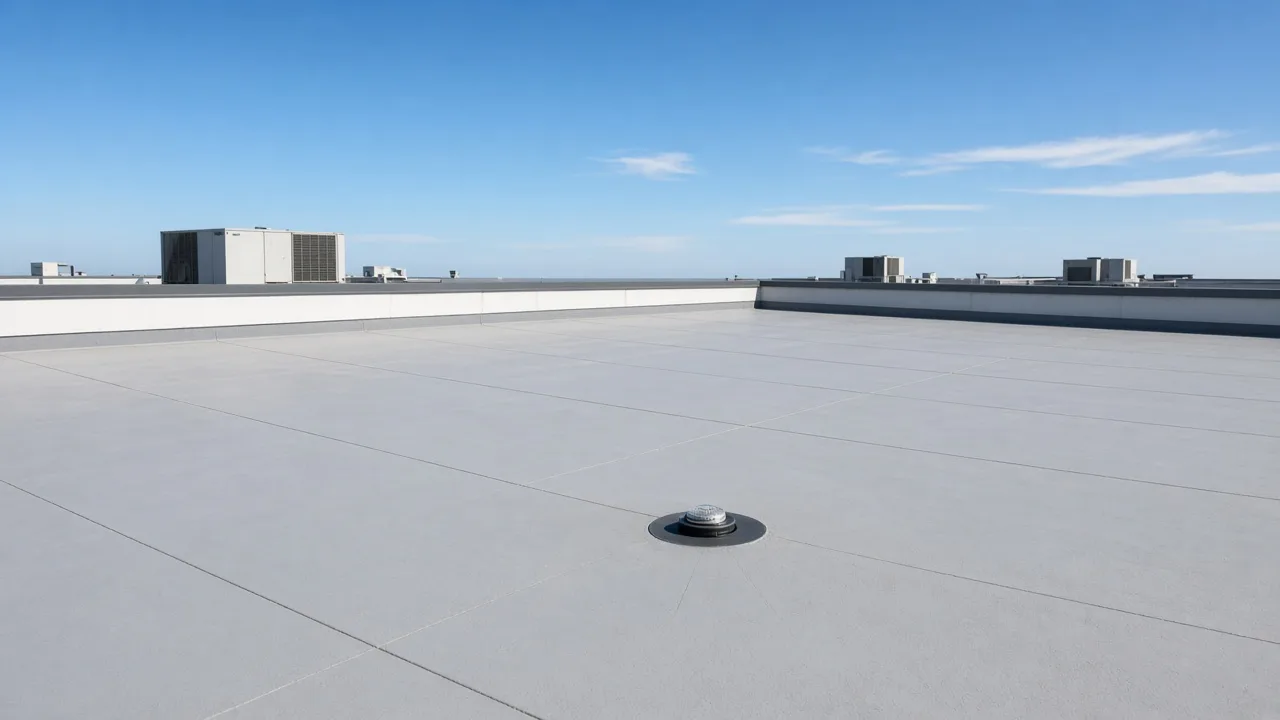
- Single-ply membranes. TPO, PVC and EPDM sheets are installed in large rolls with fewer seams. White membranes reflect heat, while EPDM is typically black.
- Liquid-applied coatings. These form a seamless layer and are often used to restore an aging roof that is otherwise sound.
Why Drainage Comes First
Standing water adds weight, accelerates wear and can seep through small defects. Many roofing manufacturers consider water that remains on the surface more than a day or two after rain to be a problem. Drains, scuppers and overflow openings must be kept clear and sized correctly. When a roof has low spots, tapered insulation or additional drains can be added during a replacement to improve flow.
Seams, Flashings and Penetrations
Most leaks on flat roofs begin at details rather than in the open field of the membrane. Look closely at seams, edges, corners, drains, vents, skylights, mechanical equipment curbs and wall junctions. Flashings should be firmly attached, sealed and free of cracks or gaps. Sealant is a maintenance item and may need to be renewed.
A Simple Maintenance Routine
- Inspect the roof twice a year and after major storms.
- Clear leaves, debris and silt from drains and gutters.
- Remove heavy objects and avoid unnecessary foot traffic, especially on single-ply membranes. Use walkway pads where access is needed.
- Photograph problem areas so changes can be tracked over time.
- Have repairs completed promptly; a small seam repair costs far less than interior water damage.
Insulation, Reflectivity and Energy Use
Flat roofs often include rigid insulation boards beneath the membrane. Adding or upgrading insulation during a replacement can improve comfort and reduce heating and cooling needs. Reflective membranes and coatings can lower roof surface temperatures in sunny climates, which may reduce cooling loads and slow thermal stress on the roofing materials. Local energy codes may set minimum insulation or reflectivity requirements, so ask a roofing professional about the rules in your area.
Warranties also deserve attention. Manufacturer warranties often depend on approved installers and on maintenance records, so keep inspection notes and invoices together.
Safety When Inspecting a Flat Roof
Only go onto a roof if you can do so safely, and never when it is wet, icy or windy. Use a stable ladder, wear shoes with good traction and let someone know you are on the roof. Stay away from edges and skylights. Many owners prefer to inspect from a ladder or with a camera drone, and to hire a professional for close examination of seams and flashings.
Repair or Replace?
A roofing professional can assess whether localized repairs, a coating or full replacement makes sense. Factors include the age and type of the membrane, the amount of trapped moisture in the insulation, the number of previous repairs and the intended life of the building. Core samples or an infrared scan may be recommended for larger roofs.
Flat roofs reward attention. A clear drain, intact flashings and a membrane in good condition will keep most roofs performing as intended for years.
p>